
Author: Rick Wong
Reading Time: 3 minutes
Introduction
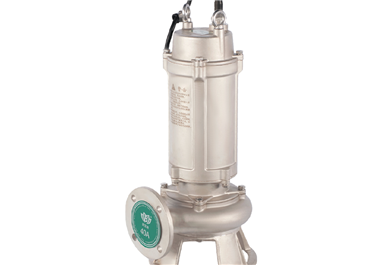
Submersible pumps are widely used for drainage, wastewater transfer, groundwater extraction, and industrial liquid handling. Unlike conventional centrifugal pumps, they operate completely underwater. With the motor and pump integrated into a fully sealed unit, they push liquid directly into the discharge pipeline—eliminating the need for suction piping or manual priming.
Their compact design, easy installation, and dependable performance make them a common choice for construction sites, municipal wastewater systems, farms, mines, water treatment plants, and industrial facilities.
What Is a Submersible Pump?
A submersible pump is a centrifugal pump equipped with a waterproof motor designed to run while fully submerged. The surrounding liquid naturally cools the motor, removing the need for an external cooling system.
Common types include:
- Clean water submersible pumps
- Sewage submersible pumps
- Grinder (cutting) sewage pumps
- Corrosion-resistant chemical pumps
- Deep well submersible pumps
Main Components
A typical submersible pump consists of:
- Waterproof motor with insulated windings, double mechanical seals, and an oil chamber to prevent water ingress.
- Pump casing and impeller, with designs suited to different media—closed impellers for clean water, semi-open for dirty water, grinder impellers for fibrous waste, and multi-stage impellers for deep wells.
- Waterproof power cable with sealed cable entry.
- Suction screen to block large debris.
- Optional float switch for automatic start/stop based on liquid level.
How Does It Work?
When submerged, the motor rotates the impeller, generating centrifugal force that draws liquid through the inlet screen and pushes it upward through the discharge pipe. Since the pump sits below the liquid surface, it avoids suction lift, priming, air-lock issues, and significantly reduces cavitation risk. At the same time, the surrounding liquid continuously cools the motor for reliable long-term operation.
Key Advantages
- No priming required—starts pumping immediately after power-on.
- No suction lift limitations, making it suitable for deep pits and tanks.
- Simple installation with only a discharge pipe and power connection.
- Quiet operation thanks to water absorbing vibration and noise.
- Efficient motor cooling for extended continuous use.
- Automatic operation when paired with a float switch.
- Simplified piping, with no suction pipe, foot valve, or priming system.
Limitations
Submersible pumps also have a few considerations:
- Maintenance can be more difficult, as the entire unit must be lifted out for servicing.
- Mechanical seals wear over time, especially in abrasive or sandy liquids.
- Dry running is not permitted, since the motor depends on surrounding liquid for cooling.
- Material selection is critical—cast iron suits wastewater, while corrosive chemicals require stainless steel, PP, or PVDF.
- Solids handling is limited by impeller passage size; fibrous wastewater is often better handled by grinder pumps.
Conclusion
Submersible pumps offer a compact, reliable, and low-maintenance solution for many liquid transfer applications. By eliminating priming and suction-related issues while providing efficient underwater operation, they are ideal for drainage, wastewater, and groundwater systems. Selecting the right pump type, material, and solids-handling capability ensures long service life and dependable performance.
 WhatsApp
 Facebook
 LinkedIn
 YouTube
