
Applicable Pumps: Centrifugal Pumps, Self-Priming Pumps, Magnetic Drive Pumps, Vertical Immersed Pumps, Diaphragm Pumps, Metering Pumps, Submersible Sewage Pumps
Reading Time: 3 Minutes
5. Motor Overheating & Frequent Tripping
If a pump motor overheats or trips repeatedly, check the following:
- Pump overload — Excessive pipeline resistance or operating outside the pump's duty point. Reduce system resistance or adjust the discharge valve.
- High-density liquids — Heavy fluids increase motor load. Consider a higher-power motor or a more suitable pump.
- Blocked impeller or worn bearings — Remove debris, inspect the impeller, and replace damaged bearings.
- Electrical issues — Low voltage, phase loss, or unstable power can cause frequent trips. Check wiring and install voltage protection if necessary.
- Submersible pump cooling — Ensure the pump remains fully submerged for proper motor cooling.
6. Magnetic Drive Pump Problems
Common issues include:
- Dry running — The leading cause of bearing, containment shell, and magnetic coupling damage. Never operate without liquid, and install dry-run protection whenever possible.
- Unstable flow — Usually caused by air entering the suction line or liquid vaporization. Check and seal all suction connections.
- Magnetic coupling failure — High temperatures may demagnetize the coupling. Replace damaged magnetic components if required.
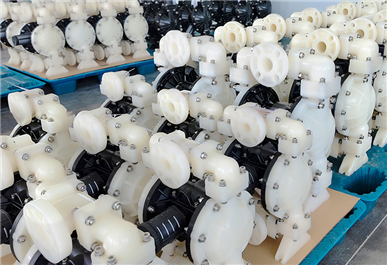
7. Air-Operated Double Diaphragm (AODD) Pump Issues
Typical problems include:
- Excessive pulsation — Install a pulsation dampener or air chamber to stabilize flow.
- Low pumping performance — Check for insufficient air pressure or leaks in the air supply system.
- Air bubbles in discharge — Inspect the suction pipeline for air leaks and reseal all connections.
8. Metering Pump Dosing Inaccuracy
Signs of dosing problems include inconsistent flow, unstable output, or incorrect chemical feed.
Common causes:
- Blocked or leaking check valves
- Worn diaphragm
- Incorrect stroke adjustment
- Chemical crystallization
Solution: Clean valve balls and seats, replace the diaphragm, recalibrate the stroke length, and flush the pump head regularly.
9. Submersible Sewage Pump Problems
Common faults include:
- Low flow — Remove debris such as fibers, cloth, or waste wrapped around the impeller.
- Motor trips — Check for water ingress, damaged cables, or insulation failure, and repair as necessary.
- Pump won't start — Inspect the float switch first, then verify the power cable and electrical supply.
10. Daily Maintenance Tips
Preventive maintenance helps reduce downtime and extend pump life.
- Install inlet strainers on chemical pumps to prevent particle damage.
- Never run magnetic drive or fluoroplastic pumps dry.
- Flush pumps regularly when handling high-temperature or high-concentration chemicals.
- Perform routine inspections for pipeline leaks, motor current, abnormal noise, and vibration.
- Before long-term storage, drain residual liquid, flush with clean water, and prevent crystallization or corrosion.
- Always match pump materials to the liquid's temperature, concentration, corrosiveness, and solids content.
Conclusion: A Simple 3-Step Troubleshooting Process
When a pump problem occurs, follow this sequence:
Step 1 — Check External Conditions
Verify the power supply, air supply, valve positions, liquid level, pipeline blockages, and possible air leaks.
Step 2 — Evaluate Liquid Conditions
Confirm the liquid temperature, viscosity, chemical compatibility, and solids content match the pump's design.
Step 3 — Inspect Internal Components
Examine the impeller, mechanical seal, bearings, magnetic coupling, diaphragm, and other wear parts.
Most pump failures can be resolved without replacing the entire unit. In many cases, cleaning blocked components, correcting operating conditions, or replacing worn parts will restore normal performance quickly.
This concludes our two-part Industrial Water Pump Troubleshooting Guide. Follow our blog for more pump maintenance tips, application guides, and industry best practices.
 (2).jpg)
 WhatsApp
 Facebook
 LinkedIn
 YouTube