
Anti-Clogging Self-Priming Pump for Wastewater Lifting: 380 L/min Stable Flow, 0 Leakage, Annual Savings
How a Vietnamese industrial wastewater station eliminated sewage overflow, frequent seal leakage, and 20 days of annual downtime by switching to FRPP self-priming pumps with an anti-clogging impeller design
Meibao self-priming pumps offer excellent corrosion resistance and an anti-clogging impeller design, providing stable performance during continuous operation. The seal-free structure eliminates leakage caused by long-term seal wear, while the strong self-priming capability works reliably even when the liquid level drops, without the need for repeated water filling. Compared with other brands we have tried, they require much less maintenance and greatly reduce downtime caused by sewage overflow.
Anti-Clogging Self-Priming Pump for Wastewater Lifting: 380 L/min Stable Flow, 0 Leakage, $280 Annual Savings
How a Vietnamese industrial wastewater station eliminated sewage overflow, frequent seal leakage, and 20 days of annual downtime by switching to FRPP self-priming pumps with an anti-clogging impeller design Customer Testimonial
Act 1: The Challenge —— Solid Waste Blockage + Seal Leakage, Making Sewage Overflow a Frequent Problem
Background
Vinh Hao Industrial Wastewater Treatment Station is located in an industrial park in Vietnam. It is responsible for treating industrial wastewater from several factories in the park. One of the key processes is the wastewater lifting system, which transfers industrial wastewater collected in the equalization tank to the downstream biological treatment units.
The wastewater contains suspended solids of up to 300 mg/L and has a weakly acidic or alkaline pH range of 4–10.
Wastewater lifting may seem simple, but it is a critical part of the entire treatment system. If a lifting pump fails, the liquid level in the equalization tank continues to rise. In minor cases, the downstream treatment units may not receive enough wastewater. In serious cases, sewage can overflow into the plant area and cause a major environmental incident.
The station has 8 lifting lines, with one self-priming pump on each line. All pumps must operate reliably around the clock.
However, these 8 pumps had become the equipment with the highest failure rate in the entire wastewater treatment station.
Key Problems
The self-priming pumps previously used by the customer had several serious problems:
- Frequent clogging: Suspended solids and fibrous materials in the wastewater built up around the impeller and volute, causing a sharp drop in flow or even complete blockage. Each blockage required the pump to be stopped and opened for cleaning, occurring at least 1–2 times per week.
- Serious seal leakage: Traditional shaft seals wore quickly in wastewater containing solid particles. Leakage occurred 3–5 times per year, with sewage flowing along the pump shaft onto the pump room floor and creating a poor working environment.
- Self-priming failure: The liquid level in the equalization tank changed frequently due to fluctuating wastewater inflow. Conventional self-priming pumps sometimes failed to draw water when the level dropped, requiring operators to manually add water and release air.
- Major downtime losses: Blockages, leakage, and self-priming failures caused up to 20 days of downtime every year, equal to almost one month of lost treatment capacity.
The average pump life was only 1.5 years, while the total annual cost per set reached $450, including purchase, maintenance, cleaning labour, and downtime losses.
Highlight Box — Root Cause Analysis
Root Causes
1. Solid-containing wastewater: Suspended solids (≤300 mg/L) and fibrous materials built up inside traditional impellers and caused blockages.
2. Seal wear and leakage: Solid particles continuously wore the sealing surfaces. As the gap became larger, sewage leakage increased.
3. Weak self-priming performance: Conventional self-priming pumps could draw in air when the liquid level dropped, causing flow interruption and requiring manual water filling and air release.
4. Mild acid and alkaline corrosion: Wastewater with a pH of 4–10 could slowly corrode metal pump parts, while wear from solid particles further accelerated failure.
5. Failure cycle: Blockage + leakage + corrosion → frequent downtime → high cleaning and repair costs → sewage overflow risk → repeated problems.
Before Data
|
Metric |
Before Meibao |
Impact |
|
Pump Lifespan |
1.5 years average |
Frequent replacement across 8 lines |
|
Annual Downtime |
20 days/year |
~4 production weeks lost, spill risk |
|
Leakage Incidents |
3–5 times/year |
Sewage overflow, EHS risk, site contamination |
|
Annual Equipment Cost |
$450/set |
Purchase + cleaning labour + downtime |
|
Medium pH Range |
4–10 |
Weak acid-base corrosive |
|
Suspended Solids |
≤300 mg/L |
Abrasive, causes clogging and seal wear |
|
Operating Temp |
40°C |
Accelerates seal aging |
|
Cleaning Frequency |
1–2 times/week |
Major labour burden |
Act 2: The Solution —— Self-Priming Pump + Anti-Clogging Impeller + Seal-Free Structure
Solution Approach
The customer's three main problems—clogging, leakage, and self-priming failure—were closely connected:
- To prevent clogging, the impeller needs wide flow passages that can handle solid particles.
- To prevent leakage, the traditional shaft seal needs to be removed.
- To ensure reliable self-priming, the pump needs strong air-water separation and self-priming capability.
Most pumps can solve only one of these problems. Vinh Hao needed one pump that could solve all three at the same time.
We therefore recommended the MA-50032L self-priming pump:
- Anti-clogging impeller design: Wide flow passages allow suspended solids to pass through smoothly.
- Seal-free structure: Eliminates the traditional shaft seal as a source of leakage.
- Strong self-priming capability: Automatically restores suction when the liquid level drops, without manual water filling.
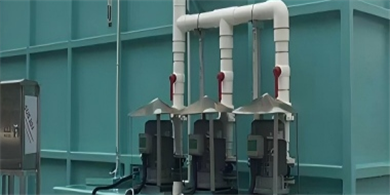
All 8 lifting lines were replaced with MA Series pumps using the same model, making maintenance and spare parts management easier.
Product Selection
|
Selection Factor |
MA-50032L Matching Advantage |
|
Anti-Clogging Impeller |
Wide-channel design allows wastewater with suspended solids ≤300 mg/L to pass through smoothly |
|
Seal-Free Structure |
Eliminates leakage caused by shaft seal wear, especially useful for solid-containing wastewater |
|
Strong Self-Priming |
Maintains reliable self-priming when the liquid level drops, without manual water filling |
|
FRPP Wetted Material |
Resistant to weakly acidic and alkaline wastewater with pH 4–10 |
|
Stable Flow |
380 L/min stable output to ensure continuous supply to downstream treatment units |
|
Easy Maintenance |
Simple structure with less need for frequent disassembly and cleaning |
Highlight Box — Key Technical Advantages
Anti-Clogging Impeller · Seal-Free Self-Priming · No Manual Water Filling
-
Anti-clogging impeller: Wide flow passages allow suspended solids and fibrous materials to pass through smoothly without building up or blocking the pump.
-
Seal-free structure: Eliminates shaft seal wear and leakage, making it a reliable choice for wastewater containing solid particles.
-
Strong self-priming: Automatically establishes suction when the liquid level drops, so operators no longer need to repeatedly add water or release air.
-
FRPP wetted parts: Resistant to mild acid and alkaline wastewater with pH 4–10, while also handling solid particles.
-
High reliability: One model is used across all 8 lines, making spare parts and maintenance easier.
Specification Table
|
Specification |
Selected Model (MA-50032L) |
Key Benefit |
|
Wet-End Material |
FRPP (Fiber-Reinforced Polypropylene) |
Corrosion-resistant to pH 4–10 wastewater |
|
Impeller Design |
Anti-clogging wide-channel |
Suspended solids pass through without blockage |
|
Self-Priming Capability |
Strong, reliable |
Works when liquid level drops, with no manual water filling |
|
Sealing Structure |
Seal-free |
No leakage risk from long-term seal wear |
|
Max Flow |
380 L/min |
Stable lifting to treatment units |
|
Max Head |
18 m |
Handles system back pressure |
|
Motor Power |
2.2 kW |
Adequate power with energy efficiency |
|
Units Installed |
8 units |
Full coverage for all lifting lines |
Project Timeline
|
Stage |
Timeline |
Description |
|
Application Assessment |
Week 1–2 |
On-site review of 8 lifting lines, suspended solids, and liquid-level changes |
|
Custom Production |
Week 3–5 |
8 MA-50032L pumps customized to the customer's connections, fully inspected and tested for self-priming before shipment |
|
Installation & Testing |
Week 6–7 |
Installation of all 8 pumps, piping connection, system testing, and self-priming tests under low-liquid-level conditions |
|
Stable Operation |
Month 8+ |
Continuous failure-free operation to date, with no clogging, no leakage, and no manual water filling required |
Act 3: The Result —— Zero Clogging, Zero Leakage, Zero Manual Water Filling, 8 Months of Reliable Operation
Results
Since installation and commissioning were completed in December 2025, the 8 MA-50032L self-priming pumps at Vinh Hao Wastewater Treatment Station have operated continuously for more than 8 months. During this period, all pumps achieved zero clogging, zero leakage, and zero downtime:
- Clogging eliminated: The anti-clogging impeller allows solid-containing wastewater to pass through smoothly. There have been no blockage-related shutdowns in 8 months, eliminating the previous 1–2 weekly cleaning operations.
- Leakage eliminated: The seal-free structure removes shaft seal wear as a common failure point. The pump room floor has remained dry.
- Reliable self-priming: When the equalization tank liquid level changes, the pumps automatically establish self-priming. Operators no longer need to manually add water or release air, greatly reducing their workload.
- Stable treatment performance: The pumps maintain a stable flow of 380 L/min, ensuring continuous wastewater supply to the downstream biological treatment units.
Station Manager Nguyen Van highlighted that, compared with other brands they had used before, Meibao pumps require much less maintenance and have significantly reduced downtime caused by sewage overflow.
Results Cards
|
✓ |
$ |
🛡️ |
|
8+ mo |
$280 |
0 |
|
Zero-downtime continuous operation |
Annual cost saving per set vs. previous pumps |
Leakage incidents across all 8 units |
|
No clogging, no manual water filling needed |
No sewage overflow |
Before vs. After
|
Comparison |
Before (Previous Self-Priming Pumps) |
After (MA-50032L) |
Improvement |
|
Clogging |
1–2 blockages per week, requiring frequent cleaning |
Anti-clogging impeller, zero clogging in 8 months |
Cleaning work eliminated |
|
Leakage Incidents |
3–5 times/year, causing sewage overflow |
Seal-free structure, 0 incidents |
Leakage eliminated |
|
Self-Priming Operation |
Manual water filling and air release required when liquid level dropped |
Automatic self-priming, no manual intervention |
Much lower operator workload |
|
Production Downtime |
20 days/year |
0 days |
4 weeks of treatment capacity recovered |
|
EHS Compliance |
Frequent leakage and high sewage overflow risk |
Dry pump room floor and improved environmental control |
Risk level greatly reduced |
|
Annual Total Cost |
$450/set (cleaning labour + maintenance + downtime losses) |
Initial investment only, with very low operating cost |
Annual savings of $280+/set |
Recommended Pumps for
Anti-Clogging Self-Priming Pump for Wastewater Lifting: 380 L/min Stable Flow, 0 Leakage, Annual Savings
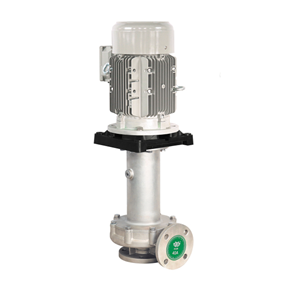
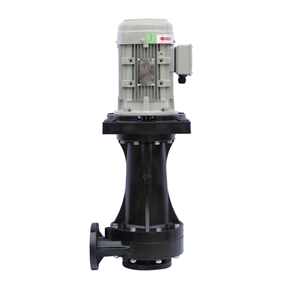
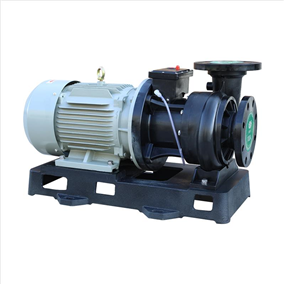
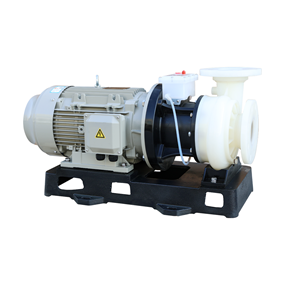
Each pump model is available in multiple material configurations to match the exact chemical and thermal requirements of your process.
 Recommended
 Recommended
 Recommended
 Recommended
Get a Free Technical Proposal
Tell us about your HF acid, chemical, or corrosive media application. Our engineering team will recommend the right pump and provide a detailed proposal within 48 hours.
 WhatsApp
 Facebook
 LinkedIn
 YouTube