
Applicable Pumps: Centrifugal Pumps, Self-Priming Pumps, Magnetic Drive Pumps, Vertical Immersed Pumps, Diaphragm Pumps, Metering Pumps, Submersible Sewage Pumps
Author: jeslyn lam
Reading Time: 3 Minutes
Introduction
Industrial pumps used in chemical processing, electroplating, wastewater treatment, and water transfer commonly encounter problems such as:
- Pump not pumping
- Low flow or pressure
- Excessive noise and vibration
- Liquid leakage
- Motor overheating
- Frequent power trips
In most cases, these issues are caused by installation errors, operating conditions, pipeline leaks, unsuitable liquids, or insufficient maintenance—not pump failure itself.
This guide summarizes the most common faults and practical troubleshooting methods for field engineers.
1. Pump Cannot Prime or No Liquid Output
Self-Priming & Centrifugal Pumps
Common causes include:
- Empty pump chamber — Refill the pump before startup and replace a leaking check valve if liquid drains back.
- Air entering the suction line — Inspect pipe joints, flanges, gaskets, foot valves, and suction pipes for leaks; tighten or replace as needed.
- Excessive suction lift — Keep suction height within the pump's rated range (typically 4--6 m), shorten suction piping, and minimize elbows.
- Blocked suction pipe or strainer — Clean filters and remove sediment or debris.
- High liquid temperature — Lower the liquid temperature or select a pump designed for hot liquids.
- Incorrect motor rotation — On three-phase motors, swap any two power phases to correct rotation.
Magnetic Drive Pumps
Possible causes:
- Dry running
- Damaged magnetic coupling
- Worn or seized internal bearings
- Closed inlet/outlet valves
- Air trapped inside the pump
Solutions: Stop the pump immediately, vent trapped air, open all valves, replace worn bearings or magnetic components, and never operate a magnetic pump without liquid.
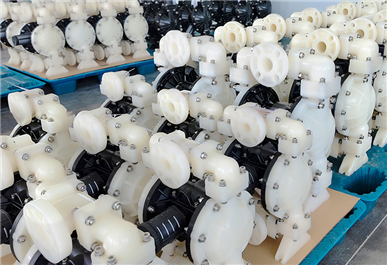
Air-Operated Double Diaphragm (AODD) Pumps
Common causes include low air pressure, clogged air filters, damaged diaphragms, or stuck air valves.
Solutions: Increase air pressure, clean the air filter, replace the diaphragm, and service the air valve assembly.
2. Low Flow Rate or Insufficient Pressure
Typical causes include:
- Blocked suction side — Clean inlet filters and maintain adequate liquid level.
- Pipeline restrictions — Fully open valves and remove scale or blockages.
- Worn or corroded impeller — Inspect, clean, or replace the impeller.
- Air leakage in suction piping — Repair leaking joints and replace damaged gaskets.
- Unsuitable liquid properties — High-viscosity or high-density liquids may require diaphragm or screw pumps instead of centrifugal pumps.
- Excessive pipeline resistance — Shorten piping, reduce elbows, and use appropriate pipe diameters.
- Low motor speed or voltage — Verify power supply and confirm the motor matches the application.
3. Pump Leakage
Leakage location often indicates the source of the problem.
- Mechanical seal leakage (centrifugal/self-priming pumps): Replace worn seals, prevent dry running, and install filters to reduce particle damage.
- Magnetic drive pump leakage: Replace corroded containment shells or aged PTFE gaskets.
- Fluoroplastic-lined pump leakage: Repair damaged lining and tighten flange bolts evenly in stages.
- Diaphragm pump leakage: Replace damaged diaphragms, check balls, or valve seats.
4. Excessive Noise and Vibration
Cavitation
Common causes include air entering the pump, high liquid temperature, or insufficient suction pressure.
Symptoms: Loud cracking noise, severe vibration, and reduced flow.
Solutions: Eliminate air leaks, lower liquid temperature, and increase suction head.
Mechanical Problems
Damaged bearings, loose impellers, or shaft misalignment can all generate vibration.
Solutions: Replace bearings, secure the impeller, and realign the shaft.
Installation Issues
Loose foundation bolts, missing vibration pads, or unsupported piping may also cause excessive vibration.
Solutions: Tighten anchor bolts, install rubber vibration pads, and properly support the piping system.
 WhatsApp
 Facebook
 LinkedIn
 YouTube